Data Centre Development in Casablanca: Power Tariffs, Permits and Infrastructure
A factual reference guide to electrical grid connections, industrial tariffs, subsea cable routes, statutory approvals and active operators for data centre developments in Casablanca, Morocco.
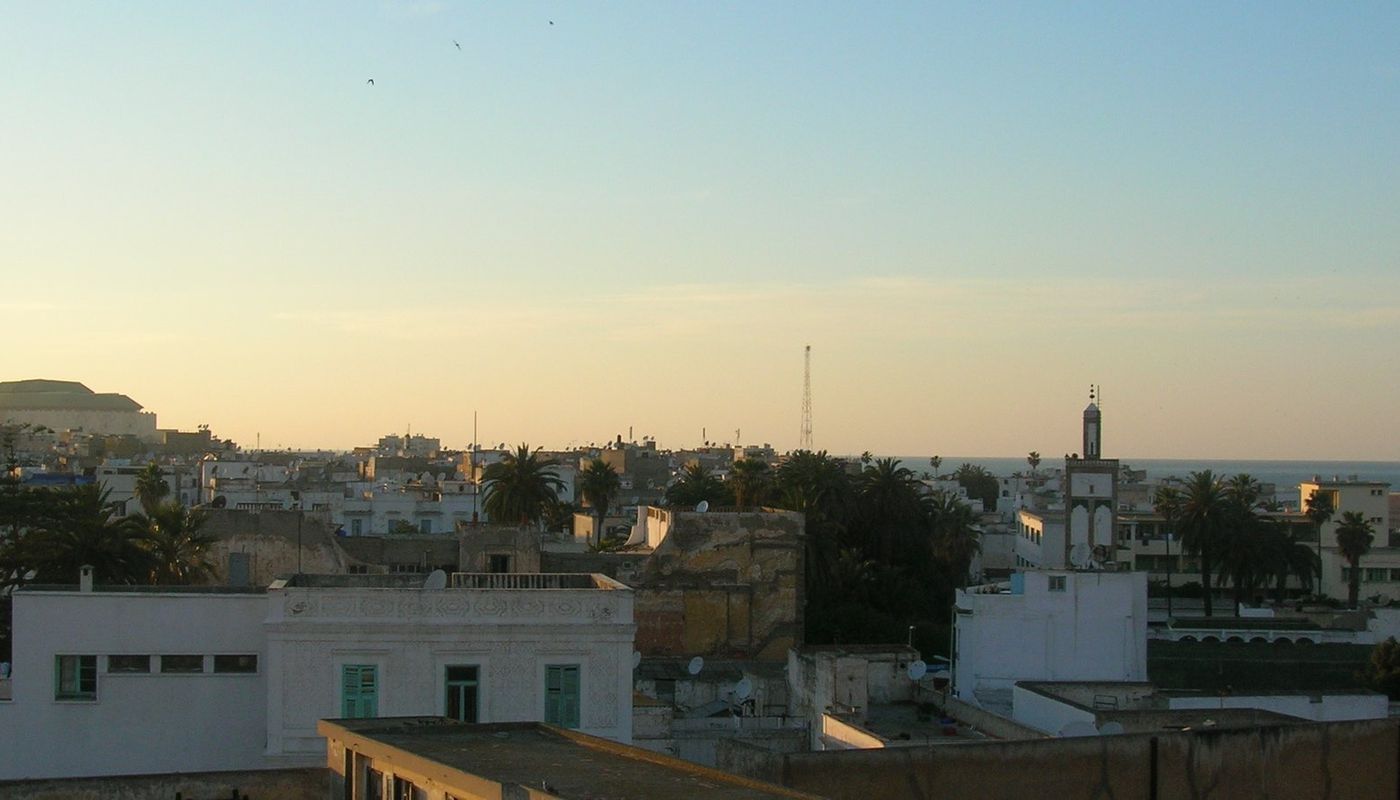
- Industrial electricity tariff
- High-voltage industrial electricity tariffs regulated by ANRE and supplied by ONEE reached 1.57 MAD per kWh in 2026.
- Grid connection wait time
- High-voltage grid connection agreements with ONEE require a lead time of 12 to 24 months for feasibility studies, substation expansion and network integration.
- Environmental approval mandate
- Environmental Impact Assessment (EIE) clearance is governed by the Ministry of Energy Transition and Sustainable Development under Law No. 12-03.
- Building permit portal
- Planning and construction applications for commercial structures are submitted digitally through the national Rokhas.ma portal.
- Data protection regulator
- Operational authorization for data processing and storage must be secured from the Commission Nationale de contrôle de la protection des Données à caractère Personnel (CNDP) under Law No. 09-08.
Electricity Supply and Grid Connection Timeframes
Developing a data centre in Casablanca requires navigating two separate entities for power infrastructure depending on the voltage level. High-voltage (HT) and very-high-voltage (VHT) transmission grid interconnections are managed by the state utility, Office National de l'Électricité et de l'Eau Potable (ONEE). Medium-voltage (MT) distribution within the Greater Casablanca urban perimeter is handled by local distribution networks.
For enterprise-grade facilities requiring dedicated high-voltage sub-stations (typically above 10 MW), developers must enter into a formal grid connection agreement (Convention de Raccordement) directly with ONEE. The realistic wait time for a high-voltage connection ranges from 12 to 24 months from initial application to final commissioning. This timeframe includes the execution of grid impact studies, allocation of transformer capacity at regional sub-stations, procurement of high-voltage switchgear, and civil works for dedicated underground cabling corridors.
Power availability varies across the Casablanca-Settat region. Industrial zones located around Nouaceur (Aeropole) and Settat are better equipped to absorb high-density electrical loads due to direct access to ONEE's 225 kV transmission lines. Downtown Casablanca locations face tighter distribution constraints, where medium-voltage connections are restricted to smaller capacities (under 5 MW) without substantial grid upgrades.
Industrial Power Tariffs and Utility Providers
Electricity pricing for commercial and industrial users in Morocco is regulated by the National Electricity Regulatory Authority (ANRE). Rates vary according to voltage tier, peak demand hours, and power factor requirements. In 2026, the average high-voltage industrial tariff for continuous operations stands at approximately 1.57 MAD per kilowatt hour (kWh).
Under Law No. 13-09 on renewable energy and Law No. 82-21 on self-generation, data centre developers can secure direct power purchase agreements (PPAs) with private renewable energy producers or install on-site solar systems. ANRE establishes the network transmission tariffs (TURT) and distribution tariffs (TURD) for wheeling green power across the ONEE national grid. ANRE set the grid feed-in tariff for surplus renewable power at 0.21 MAD per kWh during peak hours and 0.18 MAD per kWh during off-peak hours for high and medium voltage systems.
Value Added Tax (VAT) applied to industrial electricity bills in Morocco is 14 per cent, which is subject to national fiscal schedules. Developers should budget for additional fixed charges, including power factor penalties if reactive power exceeds statutory limits, as well as monthly meter maintenance fees assessed by ONEE or the local distributor.
International Fibre Connectivity and Subsea Cable Links
Casablanca serves as Morocco's principal commercial communications hub, relying on a combination of landing infrastructure in Tangier and direct landings along the Atlantic coastline. International bandwidth connects to Europe and West Africa via high-capacity submarine cable systems.
Key subsea cables supporting the market include:
- SeaMeWe-3: Links Morocco directly to Marseille and Western Europe, landing at Tetouan/Tangier.
- EurAfrica: Connects Morocco to France and Portugal.
- WACS (West Africa Cable System): Connects Morocco to the United Kingdom, Portugal, and West African coastal nations.
- HAFR (Hassan II Submarine Cable): Dedicated subsea fibre interconnecting Casablanca to Lisbon and Cadiz.
Terrestrial backhaul from cable landing stations to Casablanca data centres is provided over redundant, geographically diverse fibre routes along the highway and rail corridors. Three licensed national telecommunications operators provide dark fibre, wavelength services, and IP transit in Casablanca: 1. Maroc Telecom (Itissalat Al-Maghrib): Controls extensive national duct infrastructure and international landing stations. 2. Orange Maroc: Operates carrier-neutral connectivity routes and integrated backhaul networks. 3. Inwi (Wana Corporate): Provides high-capacity metro fibre rings across Casablanca's primary industrial zones.
Carrier-neutral facilities in Nouaceur offer dual-path fiber entry points (Meet-Me-Rooms) with direct cross-connects to all three major carriers.
Statutory Permits and Regulatory Approvals
Constructing and operating a data centre facility in Casablanca involves several specific statutory permits across municipal, environmental, and cybersecurity jurisdictions:
1. Planning and Building Authorization
Commercial construction permits must be submitted via Rokhas.ma, the national digital platform for urban planning applications. Approvals require consent from the Casablanca Urban Agency (Agence Urbaine de Casablanca), the local municipality (Commune), the Civil Protection Directorate (Protection Civile) for fire and safety compliance, and the relevant electricity distributor. Processing time typically ranges from 60 to 90 days following submission of complete architectural and engineering documentation.
2. Environmental Impact Clearance
Data centres utilizing large-scale diesel backup generators (exceeding thermal output thresholds) or wet cooling towers require an Environmental Impact Assessment (Évaluation d'Impact sur l'Environnement - EIE). Governed by Law No. 12-03, environmental clearance must be secured from the Ministry of Energy Transition and Sustainable Development. The process involves a public inquiry and evaluation by the National Committee on Environmental Impact Assessments, taking between 4 to 6 months.
3. Data Protection Compliance
Any data centre facility hosting personal data must comply with Law No. 09-08 on the protection of individuals with regard to the processing of personal data. Operations must file prior declarations or obtain authorizations from the Commission Nationale de contrôle de la protection des Données à caractère Personnel (CNDP) before commencing data storage or cloud hosting operations. Cross-border data transfers require explicit authorization from the CNDP.
4. Cybersecurity and Sovereign Infrastructure Certification
Data centres providing cloud services to government entities, financial institutions, or critical national infrastructure must adhere to cybersecurity guidelines issued by the Direction Générale de la Sécurité des Systèmes d'Information (DGSSI) under Law No. 05-20. Compliance audits cover physical access controls, logical isolation, and operational redundancy standards.
Active Operators and Existing Data Centre Infrastructure
Casablanca's data centre ecosystem is concentrated within the Nouaceur industrial zone near Mohammed V International Airport, as well as suburban commercial parks. Active operators include:
- N+ONE Datacenters: A major carrier-neutral provider operating multiple facilities in Casablanca, including CMN Campus, DC-I, DC-II, and the DC-III facility in the Aeropole zone of Nouaceur. N+ONE offers colocation, Tier III-standard white space, and high-density GPU hosting infrastructure.
- Orange Maroc: Operates carrier-neutral facilities including Orange DC2 (formerly Etix Everywhere) and Orange DC5 in the SAPINO industrial area in Nouaceur. DC2 is Tier III certified for Design and Facility by the Uptime Institute.
- Inwi (Wana Corporate): Operates the Inwi Sapino Data Center in Nouaceur, providing Tier III certified colocation infrastructure to enterprise and financial sector clients.
- Maroc Telecom: Maintains proprietary data centres in central Casablanca (such as the Nations Unies facility) catering primarily to internal network hosting and public sector workloads.
- Genious Communications: Operates a private data centre facility in Nouaceur providing cloud and web hosting services.
Building specifications in Casablanca favor modular Tier III designs equipped with N+1 or 2N UPS configurations, 72-hour on-site fuel storage for backup diesel generators, and indirect free-cooling systems to manage seasonal temperature variations.
Common questions
- Which agency manages high-voltage power grid connections in Casablanca?
- High-voltage transmission grid connections and sub-station capacity allocations in Morocco are managed exclusively by the state utility, Office National de l'Électricité et de l'Eau Potable (ONEE).
- What is the average industrial electricity tariff in Morocco?
- In 2026, the regulated high-voltage industrial electricity tariff supplied by ONEE and overseen by ANRE stands at approximately 1.57 MAD per kWh.
- How are building permits for data centres processed in Casablanca?
- Building permits must be submitted online through the national digital platform Rokhas.ma for review by the Casablanca Urban Agency, the local municipality, and civil protection authorities.
- Which environmental law governs data centre development in Morocco?
- Environmental clearances for facility construction and industrial backup power systems are governed by Law No. 12-03 under the authority of the Ministry of Energy Transition and Sustainable Development.
- What authority regulates personal data storage in Moroccan data centres?
- Data processing and storage facilities hosting personal information must obtain authorization or file declarations with the Commission Nationale de contrôle de la protection des Données à caractère Personnel (CNDP) under Law No. 09-08.
- Where are most data centres located in Casablanca?
- The primary concentration of data centres is in the Nouaceur area near Mohammed V International Airport, including the SAPINO and Aeropole industrial parks, due to favorable power grid infrastructure and fiber access.
- gtai.de. gtai.de
- www-pub.iaea.org. www-pub.iaea.org
- res4med.org. res4med.org
- anre.ma. anre.ma
- greentaqa.energy. greentaqa.energy
- pv-magazine.com. pv-magazine.com
- datacenters.com. datacenters.com
- datacentermap.com. datacentermap.com
Compiled by the Propstock research desk from the sources above.