Dubai Residential Values Fall 3% in Q2 2026 as Delivery Volumes Expand
Quarterly price and rent declines mark a shift toward supply-led consolidation, while commercial office transactions surge 200% over the same six-month period.
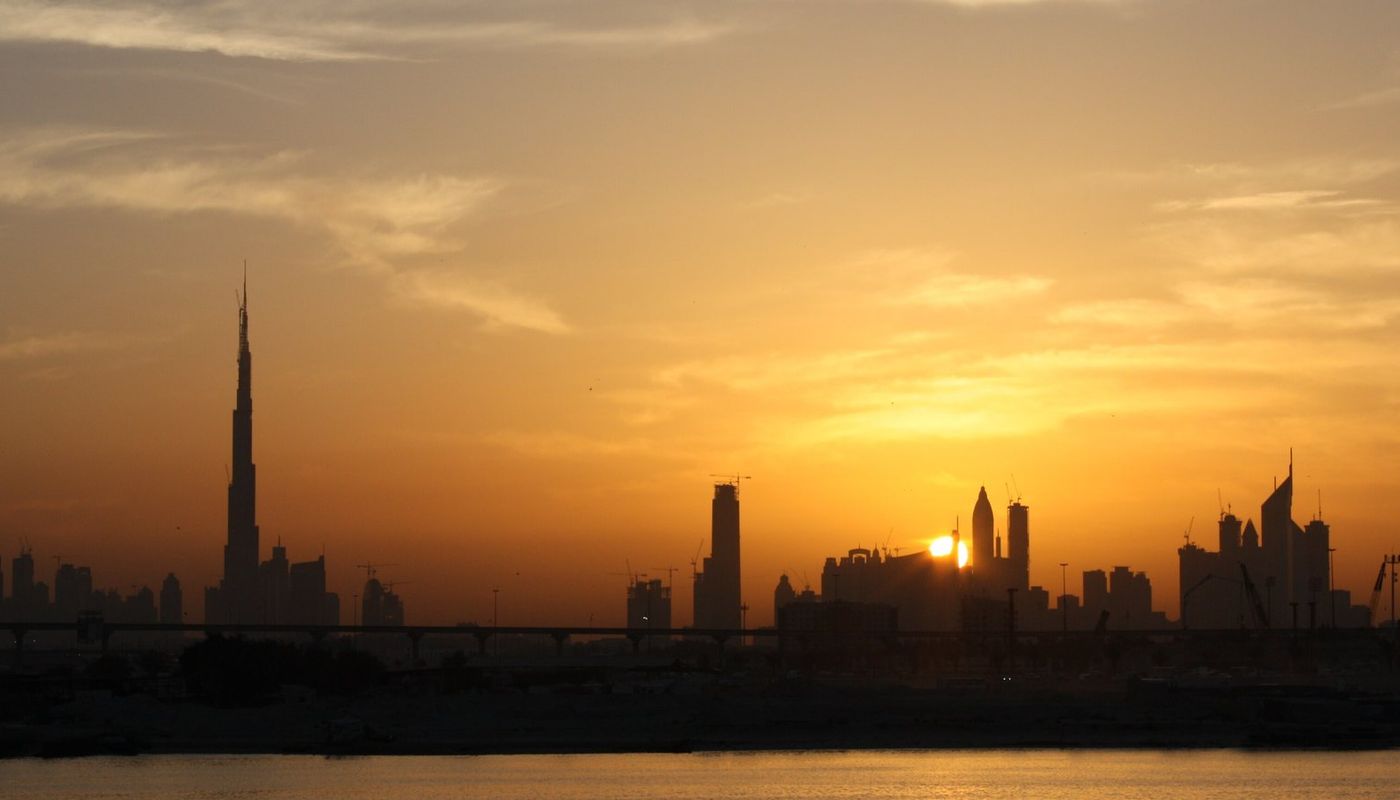
Average residential sales prices across Dubai dropped 3% quarter-on-quarter in Q2 2026, according to quarterly market data published by Colliers. The decline affected both the apartment and villa segments equally at 3% quarter-on-quarter, while rental markets recorded sharper downward adjustments. Apartment rents fell 4% quarter-on-quarter, whereas villa rents decreased by 2% over the same three-month reporting period. Parallel cooling trends were observed across neighboring Abu Dhabi and Sharjah, confirming that moderation is taking hold across the wider United Arab Emirates following years of post-pandemic appreciation.
Evaluating these figures requires isolating the quarterly movement from the broader annual baseline. On a year-on-year comparison against Q2 2025, Dubai apartment sales prices remained 19% higher, while villa sales prices were 10% higher in Q2 2026. The contrast between a 3% quarter-on-quarter contraction and a 19% annual gain demonstrates that single-quarter data points reflect a change in direction rather than a complete reversal of historical gains. Market analysts and underwriting teams must distinguish short-term composition shifts from long-term capital trajectory, as nominal quarterly dips do not erase the accumulated appreciation of prior periods.
Delivery Volume and Supply Expansion
Data from Colliers shows that approximately 11,650 residential units were delivered in Dubai during Q2 2026. This completed stock comprised 9,200 apartments and 2,450 villas. An additional 56,600 residential units are scheduled for physical completion by the end of 2026, bringing substantial new physical supply onto the market.
For the first half of the year as a whole, data released by the Emirates News Agency (WAM) and real estate consultancy Cavendish Maxwell shows that Dubai completed 104 real estate projects. These finished developments carried a combined investment value of AED 111 billion and delivered over 24,000 units during H1 2026. This represents a 36% increase compared to the 18,200 units completed in H1 2025. The influx of completed inventory has directly altered physical market availability across key submarkets.
In response to expanding physical rental inventory and tenant affordability constraints, tenant leasing transactions fell 25% quarter-on-quarter during Q2 2026, according to Colliers. To address these emerging tenant affordability constraints as supply multiplied, the Dubai Land Department introduced the Flexi Rent initiative in 2026. This administrative mechanism reflects an institutional effort to stabilize occupancy levels as rental options expand for occupiers.
Developer Strategy and Launch Moderation
While completions and handovers accelerated in H1 2026, forward supply pipelines show an abrupt pullback in project launches. Figures from Cavendish Maxwell indicate that new launch activity in Dubai slowed sharply in H1 2026, with developers bringing 28,000 units to market across 124 projects. This represents a substantial contraction from H1 2025, when developers launched 102,000 units across 410 individual projects.
This drop in project launches demonstrates a direct operational recalibration by off-plan developers. On our reading, developers are delaying initial sales launches to digest existing order books and avoid over-saturating the off-plan market during a phase of softening capital appreciation. The curtailment of new launches by over 70% year-on-year will reduce the volume of off-plan stock competing for private investor capital through late 2026 and 2027.
For cross-border institutional investors and off-plan buyers, the combination of falling quarterly rents and expanding completed stock requires updated financial modeling. With apartment rents down 4% quarter-on-quarter and villa rents down 2% quarter-on-quarter, gross rental yields are compressing. Underwriting assumptions that previously relied on double-digit rental growth must now factor in yield compression and extended lease-up periods.
Prime Residential and Commercial Divergence
The moderation seen in mainstream residential pricing has not spread uniformly to prime assets or commercial real estate. Global property consultancy Knight Frank reported that Dubai recorded 131 residential transactions exceeding USD 10 million in value during Q2 2026 alone. Within this super-prime segment, 26 individual home sales exceeded a purchase price of USD 25 million during the quarter.
Simultaneously, commercial real estate metrics diverged significantly from residential trajectory. According to data from ANAROCK Middle East, Dubai commercial real estate transaction value grew 8.5% year-on-year in H1 2026, reaching AED 65.23 billion. This commercial growth was driven primarily by office capital transactions, where total sales value rose 200% year-on-year to reach AED 15.81 billion in H1 2026.
This division between residential yields and commercial deal flow highlights a key institutional allocation shift. On our analysis, capital is reallocating from oversupplied residential yield vehicles into commercial office stock, where limited Grade A space and expanding corporate footprints support direct asset purchases. Investors evaluating the UAE real estate asset class cannot treat residential index drops as a proxy for total property market health.
Counterweights to the Bearish Reading
For the conclusion that Dubai has entered a prolonged residential cooling phase to prove incorrect, several market parameters would need to shift rapidly. A core counterweight lies in the luxury asset tier, where high-net-worth liquidity remains active. If prime transactions above USD 10 million continue at the rate of 131 deals per quarter documented by Knight Frank, capital value resilience in prime coastal enclaves could pull broader market index benchmarks upward.
Furthermore, the sharp pullback in H1 2026 project launches to 28,000 units could create an inventory deficit faster than current completion schedules suggest. If the 56,600 units scheduled for delivery in late 2026 experience construction delays, physical supply expansion will remain constrained. Under those circumstances, tenant leasing demand could reabsorb existing rental stock, reversing the 25% drop in quarterly leasing transactions and restoring positive rent growth.
Finally, the 200% year-on-year surge in commercial office transaction value to AED 15.81 billion indicates ongoing corporate expansion into the emirate. If business entry continues to generate white-collar employment at current rates, population expansion could rapidly absorb the newly completed residential units delivered during 2026.
Concrete Indicators to Watch
The trajectory of Dubai residential values will be decided by specific supply milestones over the next 18 months. The immediate benchmark is the completion schedule for the final two quarters of 2026, which targets the delivery of 56,600 residential units as tracked by Colliers. Market observers must monitor whether actual handover figures meet this projection or fall short due to operational bottlenecks.
The critical multi-year benchmark occurs in 2027, when Dubai's long-term residential supply pipeline reaches its peak. According to pipeline tracking data from Property Monitor and DXBInteract, forecasted deliveries will hit 140,637 residential units in 2027. This 2027 figure represents the largest annual delivery volume in the emirate's recorded pipeline.
Whether population growth and corporate net migration can absorb 140,637 completed units in 2027 will determine whether the 3% quarter-on-quarter price decline in Q2 2026 marks a transient cyclical adjustment or the beginning of a multi-year supply-driven consolidation phase.
- Arabian Business. UAE property market shifts: Dubai home prices and rents fall as Abu Dhabi, Sharjah also cool
- Arabian Business / Colliers. UAE property market shifts: Dubai home prices and rents fall as Abu Dhabi, Sharjah also cool
- Emirates News Agency (WAM). Dubai's real estate sector completes 104 projects valued at over AED111 billion in H1 2026
- Gulf News / Cavendish Maxwell. Dubai Property Market 2026: 24,800 New Homes Boost Supply as Prices and Rents Ease
- Knight Frank. Record-breaking 296 US$ 10 million+ homes sell in Dubai during H1 2026
- The Economic Times / ANAROCK Middle East. Dubai office boom drives commercial real estate growth; transaction value triples in H1 2026
- Property Monitor / DXBInteract. Dubai's residential pipeline (2026–2030) - Supply Snapshot
Compiled by the Propstock research desk from the sources above.