Mumbai Site Redevelopment: Demolition Permits, FSI Rules and Tenant Rights
A factual reference guide detailing Mumbai municipal approvals, heritage restrictions, DCPR 2034 buildable area calculations, tenant rehousing mandates, and project lead times.
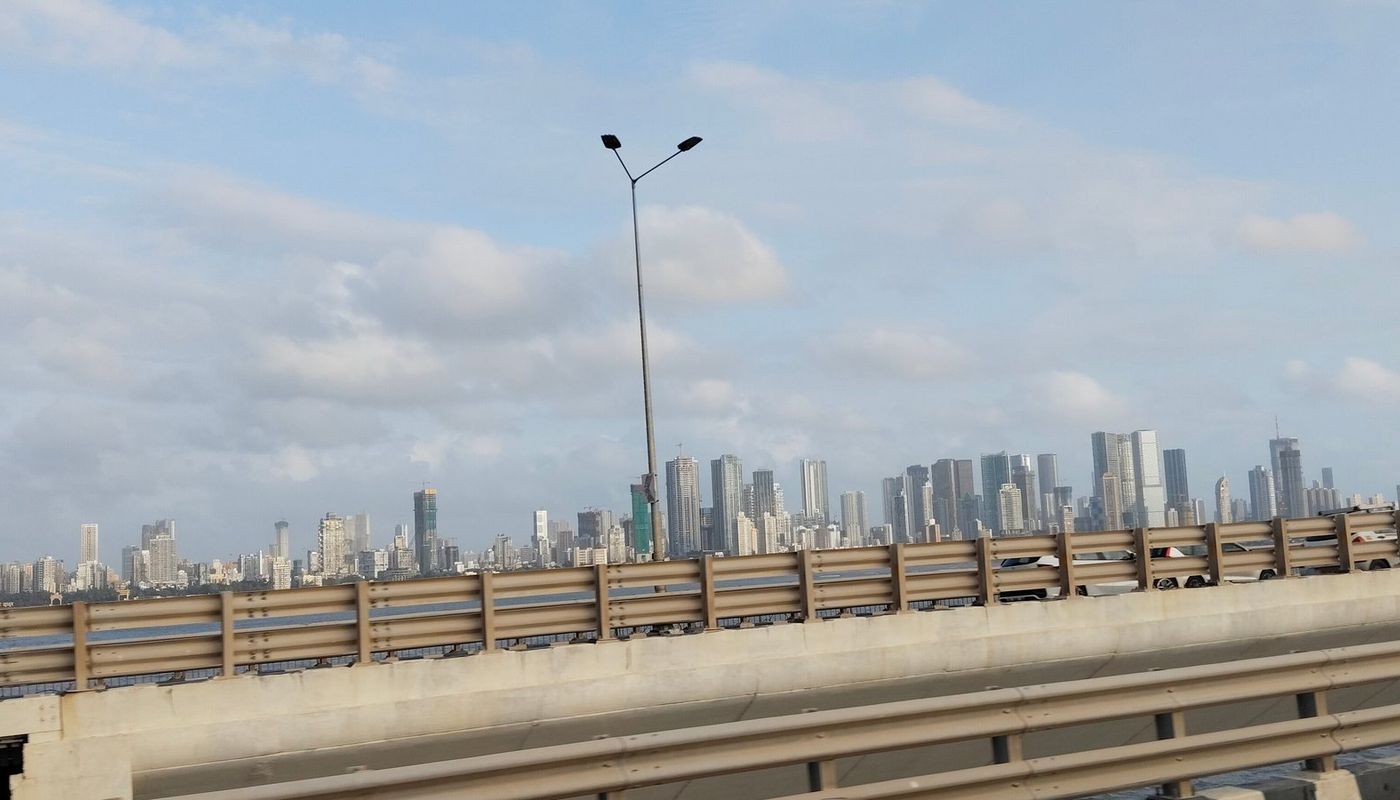
- Planning regulation framework
- Development Control and Promotion Regulations (DCPR) 2034, administered by the Brihanmumbai Municipal Corporation (BMC)
- Demolition and building consent documents
- Intimation of Disapproval (IOD) and Commencement Certificate (CC) issued under the Mumbai Municipal Corporation Act 1888
- Minimum tenant rehabilitation carpet area
- 27.88 square metres (300 square feet) provided free of cost under DCPR 2034 Regulation 33(7)
- Pre-construction approval timeframe
- 12 to 18 months from proposal submission to full Commencement Certificate
- Additional FSI and fungible premium rate
- 50% of the Annual Statement of Rates (Ready Reckoner rate) set for the year 2026
Planning Framework and Demolition Permits
Redevelopment of land and existing buildings in Greater Mumbai is governed primarily by the Development Control and Promotion Regulations for Greater Mumbai 2034 (DCPR 2034) and enforced by the Brihanmumbai Municipal Corporation (BMC), officially named the Municipal Corporation of Greater Mumbai (MCGM). Development work is regulated under the provisions of the Maharashtra Regional and Town Planning Act 1966 and the Mumbai Municipal Corporation Act 1888.
A developer or buyer cannot demolish a structure without municipal sanction. Demolition is triggered either through a formal application for building plan approval or via a statutory notice under Section 354 of the Mumbai Municipal Corporation Act 1888, where the BMC declares a building structural risk as Category C1 (dangerous and requiring immediate evacuation and demolition). To execute a planned tear-down for redevelopment, the developer must submit a plan through a registered architect to the Building Proposal Department of the BMC. The authority issues an Intimation of Disapproval (IOD), which lists statutory conditions that must be fulfilled prior to work starting. A specific Demolition Permission is then granted alongside or as part of the initial Commencement Certificate (CC) up to the plinth level. The BMC will not allow physical demolition to proceed until all occupants have vacated, vacant possession is established, and transit accommodation or rental compensation agreements are verified.
Heritage and Conservation Restrictions
Site acquisition in Mumbai requires verification against the heritage list maintained by the Mumbai Heritage Conservation Committee (MHCC) under Regulation 52 of DCPR 2034. Heritage structures and precincts are categorized into three main grades, each imposing distinct development limits:
- Grade I: Structures of national or regional importance. No demolition, exterior alteration, or additional construction is permitted. Only internal conservation and structural stabilization are allowed.
- Grade II (Sub-grades II-A and II-B): Buildings of regional or local architectural importance. Grade II-A allows internal alterations and adaptive reuse, but demolition is strictly prohibited. Grade II-B permits regulated additions or partial alterations subject to individual clearance from the MHCC.
- Grade III and Heritage Precincts: Buildings that evoke the character of a neighborhood (such as Marine Drive or Fort). Demolition and redevelopment are permitted, but plans require MHCC approval. Redevelopment must adhere to strict contextual guidelines regarding streetline, maximum height, facade design, and material finishes.
Properties located within a 100-metre radius of Grade I structures or within designated heritage precincts must undergo MHCC scrutiny, which adds regulatory review time to the pre-construction phase.
Calculation of Permissible Buildable Area
Buildable potential on Mumbai land is expressed through the Floor Space Index (FSI), which denotes the ratio of total permissible built-up area to the net plot area. DCPR 2034 changed buildable area calculations by linking base FSI directly to fronting road width.
Under base Regulation 30, the standard base FSI is 1.33 for the Island City and 1.00 for the Suburbs. Total buildable FSI is calculated through three stacked components:
1. Base FSI: The base land allocation permitted by right based on plot location. 2. Additional Premium FSI: Extra FSI granted by the BMC upon payment of a premium. For residential developments, the premium is fixed at 50% of the land rate specified in the Annual Statement of Rates (Ready Reckoner rate) for the year 2026. 3. Transferable Development Rights (TDR): Development rights purchased on the open market, generated from land reservation surrenders or slum redevelopment projects elsewhere in the city. The amount of TDR usable on a site depends on the width of the abutting road (minimum 9.0 metres for basic TDR utilization; 12.0 to 18.0 metres or higher for maximum TDR loading).
In addition to the gross plot FSI, developers can purchase Fungible Floor Space Index up to 35% over the permissible FSI for residential developments and 20% for commercial developments, payable at 50% of the Ready Reckoner rate for residential and 50% for commercial as per 2026 municipal scales.
Special redevelopment schemes offer enhanced FSI formulas. Under Regulation 33(7) for cessed tenanted structures in the Island City, permissible FSI is 3.00 or the area required to rehabilitate existing tenants plus an incentive FSI ranging from 50% to 70%, whichever is higher. Under Regulation 33(10) for slum rehabilitation, total plot FSI can extend up to 4.00.
Tenant Rights and Mandatory Compensation
When acquiring a site occupied by protected tenants or existing flat owners, Mumbai law strictly enforces rehabilitation requirements. A developer cannot clear a tenanted site purely by cash buyouts unless explicit statutory conditions are met.
Under Regulation 33(7) (cessed buildings) and Regulation 33(7A) (suburban tenanted buildings), every lawful tenant listed on the Annexure-II certified roll is legally entitled to a new self-contained housing unit in the redeveloped building free of cost. The minimum mandatory carpet area for a rehabilitated residential unit is 27.88 square metres (300 square feet), with maximum caps extending up to 120 square metres (1292 square feet) based on original occupied area.
Before obtaining a Commencement Certificate (CC) to demolish the existing structure, the developer must secure the consent of at least 51% to 70% of eligible occupants (depending on whether the project falls under society redevelopment or slum rehabilitation regulations) and execute individual Development Agreements or Permanent Alternate Accommodation Agreements (PAAA) registered with the Sub-Registrar of Assurances. During the construction period, the developer must either provide temporary transit accommodation or pay monthly rental compensation (hardship allowance) to every displaced tenant to cover alternative housing costs until the Occupation Certificate (OC) is granted.
Costs and Timeline to Permit Stage
The typical timeframe to take a site from initial acquisition and survey through to full building permit issuance ranges between 12 and 18 months.
Key process milestones include:
- Months 1 to 3: Title verification, land survey, structural audit, obtaining Development Plan (DP) remarks from BMC, and compilation of the certified tenant list (Annexure-II) from MHADA or the Competent Authority.
- Months 4 to 8: Finalization of building plans, submission via the AutoDCR online portal, and issuance of the Intimation of Disapproval (IOD) by the BMC Building Proposal Department.
- Months 9 to 14: Obtaining statutory clearances (MHCC heritage approval, Fire NOC from the Mumbai Fire Brigade, Tree Authority approval, Environmental Clearance if gross construction exceeds 20,000 square metres), execution of tenant agreements, and payment of municipal premiums.
- Months 15 to 18: Grant of the Commencement Certificate (CC) up to plinth level, allowing site clearing and demolition to commence.
Approval fees and statutory charges represent a significant portion of total capital expenditure. Municipal premiums for additional FSI, fungible FSI, staircase/lift lobby areas, scrutiny fees, and development charges generally account for 15% to 25% of the overall project cost. These rates are calculated directly from the official land value published in the Maharashtra Government's Ready Reckoner rates.
Common questions
- What authority issues building and demolition approvals in Mumbai?
- Approvals and demolition permissions are issued by the Building Proposal Department of the Brihanmumbai Municipal Corporation (BMC) under the provisions of the Mumbai Municipal Corporation Act 1888 and DCPR 2034.
- Can a heritage listed building in Mumbai be demolished?
- Grade I and Grade II-A listed buildings cannot be demolished under any circumstances. Grade III structures and buildings inside heritage precincts may be redeveloped if approved by the Mumbai Heritage Conservation Committee (MHCC).
- What is the minimum rehab unit size for an existing tenant?
- Under DCPR 2034 Regulation 33(7), lawful residential tenants are entitled to a rehousing unit with a minimum carpet area of 27.88 square metres (300 square feet) free of cost.
- How is buildable area increased beyond base FSI in Mumbai?
- Buildable area can be expanded by purchasing Additional Premium FSI from the BMC, buying Transferable Development Rights (TDR) from the market, and utilizing Fungible FSI.
- What document grants official permission to start construction?
- Physical construction work and demolition on site can begin only after the BMC issues the Commencement Certificate (CC), which follows the initial Intimation of Disapproval (IOD).
- How long does it take to get a Commencement Certificate in Mumbai?
- Securing approvals from initial plan submission to a full Commencement Certificate typically takes between 12 and 18 months.
- mchi.net. mchi.net
- societyredevelopmentmumbai.com. societyredevelopmentmumbai.com
- data.opencity.in. data.opencity.in
- societyredevelopmentmumbai.com. societyredevelopmentmumbai.com
- magicbricks.com. magicbricks.com
- redevelopmentofhousingsocieties.com. redevelopmentofhousingsocieties.com
- facebook.com. facebook.com
- propnewz.com. propnewz.com
Compiled by the Propstock research desk from the sources above.