Property Development Approval Process in Kigali: Sequence, Authorities, and Timelines
This guide outlines the complete legal and regulatory sequence required to take a real estate project from land verification to the issuance of an Occupancy Permit in Kigali, Rwanda.
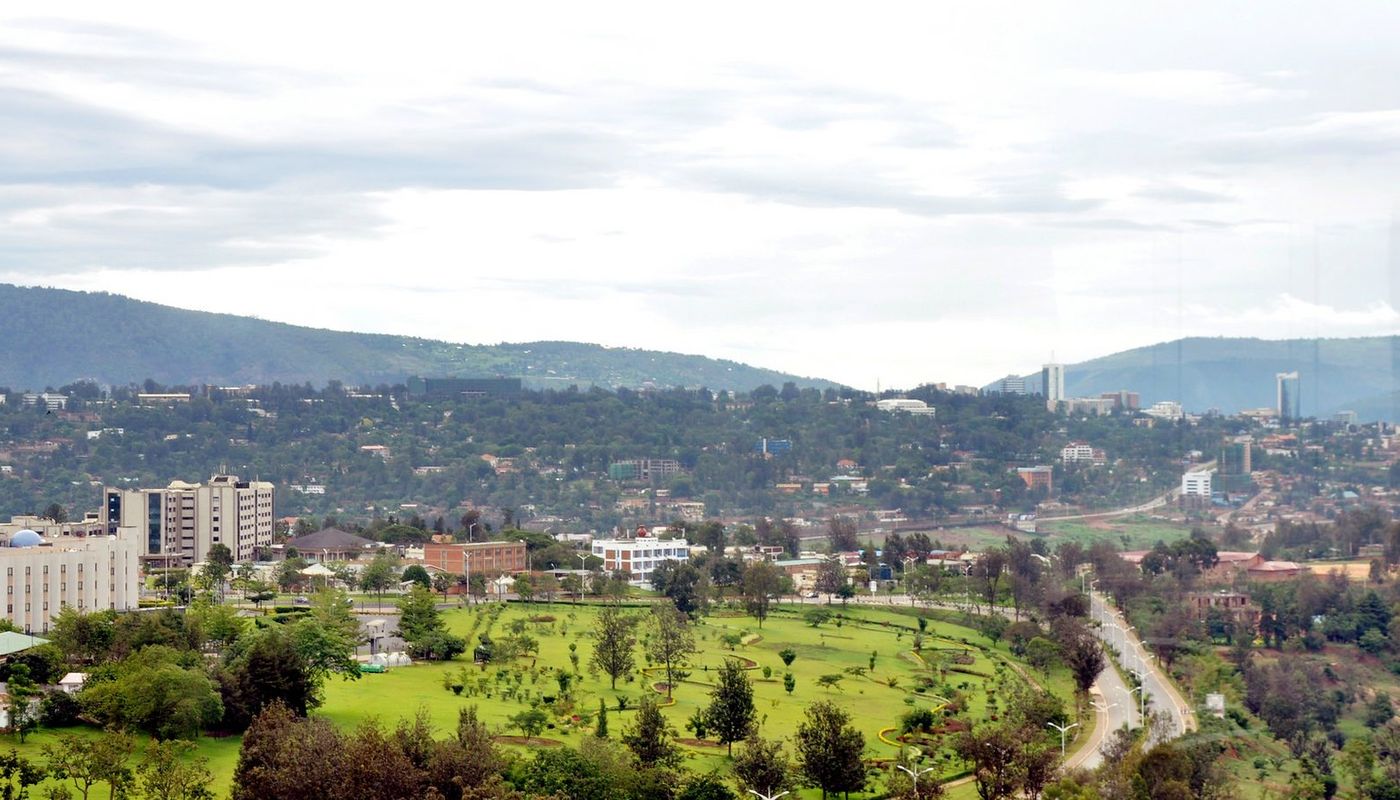
- Land registration fee
- 0.5% of declared property value payable to the National Land Authority (2026)
- Permit issuing authority
- City of Kigali One Stop Centre via the KUBAKA digital portal
- Construction permit statutory review timeframe
- 21 days for complete applications in the City of Kigali
- Corporate income tax rate
- 28% on taxable business profits from real estate developments (2026)
- Final occupancy clearance
- Occupancy Permit issued by the City of Kigali One Stop Centre
Land Acquisition and Title Registration
Every real estate development in Kigali begins with establishing clear legal tenure over the parcel. In Rwanda, land is held under a long-term leasehold system governed by Organic Law No. 27/2021. Foreign investors and domestic entities obtain lease titles through the National Land Authority (NLA), operating under the Ministry of Environment. Land parcels are identified by a Unique Parcel Identifier (UPI) in the Land Administration Information System (LAIS).
To complete a land purchase or lease transfer, the developer must execute a transfer agreement and submit it to the NLA or the District Land Bureau. The Rwanda Revenue Authority (RRA) verifies that all land taxes are paid before approving title issuance. Standard land registration and transfer fees stand at 0.5% of the declared property value. The process of updating title deeds in the buyer's name typically takes 7 to 14 working days once tax clearance is confirmed.
Master Plan Compliance and Land Use Zoning
Land development in the capital is governed by the Kigali Master Plan 2050. Before commissioned architectural work begins, a developer must cross-check the parcel's Unique Parcel Identifier against the Master Plan zoning map, accessible via the official online geodata portal. Zoning classifications dictate allowable land uses, floor area ratios (FAR), maximum building heights, plot coverage, green space percentages, and mandatory setbacks.
If a proposed project aligns directly with the designated zoning (permitted use), design work can proceed immediately. If the proposal falls outside standard land-use rules but remains compatible with surrounding urban objectives, the developer must apply for a Conditional Land Use Permit. This application is submitted to the City of Kigali One Stop Centre. The review evaluates environmental factors, traffic impact, and infrastructure capacity. Securing a conditional approval adds approximately 14 to 30 days to the pre-design phase.
If a project requires a permanent change of land-use classification, a formal rezoning application must be submitted to the National Land Authority in coordination with the City of Kigali Advisory Council. Rezoning requires technical assessments and public consultation, taking between 60 and 120 days.
Environmental Clearances and Technical Preparation
Prior to submitting building designs, specific environmental and technical clearances must be secured depending on the project scale. Under rules established by the Rwanda Environmental Management Authority (REMA), medium and large-scale commercial, industrial, or multi-family residential developments require an Environmental Impact Assessment (EIA). The developer engages a certified environmental expert to prepare an EIA report for REMA submission. REMA issues an Environmental Clearance Certificate, a process that typically takes 30 to 45 days.
Simultaneously, the developer must retain professionals registered with recognized statutory bodies in Rwanda. Architectural designs must be produced and stamped by a member of the Rwanda Institute of Architects (RIA). Structural calculations, mechanical, electrical, and plumbing (MEP) schematics, and geotechnical soil studies must be stamped by registered professional engineers. Drawings created by unregistered or non-certified personnel are rejected by administrative portals.
Application for the Construction Permit
All construction permit applications in Kigali are processed digitally through the KUBAKA portal (the upgraded Building Permitting Management Information System - BPMIS), managed by the Rwanda Housing Authority (RHA) and the City of Kigali One Stop Centre.
The registered architect or lead engineer uploads the complete dossier to the portal. The application package must include:
1. Proof of land title (UPI deed) and tax clearance certificate from RRA. 2. Detailed topographic and site surveys. 3. Stamped architectural drawings, structural calculations, and MEP plans. 4. Environmental Clearance Certificate from REMA (where applicable). 5. RHA Form 4 (Certification for Design Sufficiency) signed by the project lead. 6. Traffic impact assessments and utility clearance letters (WASAC for water, EUCL for electricity) for large projects.
Once the file is uploaded, the system automatically checks for completeness. Processing fees are generated based on the scale and value of the project and are paid via mobile money or electronic bank transfer.
Statutory Review and Permit Issuance
The evaluation of the dossier is conducted by the City of Kigali Construction and Urban Planning One Stop Centre. Technical officers assess compliance with building codes, fire safety guidelines, structural stability standards, and master plan requirements.
By regulation, the City of Kigali One Stop Centre completes the assessment within 21 days for standard commercial and residential submissions. If revisions or corrections are flagged, notification is sent directly to the registered architect or engineer via SMS and email. The timer pauses until the revised drawings are re-uploaded.
Upon formal approval, the Construction Permit is generated digitally with a verifiable QR code. The standard permit remains valid for 1 to 5 years depending on the project category and scale, and can be renewed online via KUBAKA if construction is delayed.
Site Inspections and Construction Compliance
Construction cannot commence immediately upon permit issuance without notifying the authority. The supervising engineer must submit an RHA Form 5 (Certification for Commencement) through the KUBAKA system.
During execution, municipal inspectors from the One Stop Centre conduct mandatory site visits at key structural milestones, including foundation layout, slab casting, structural framing, and final roofing. The contractor and project supervisor log inspection notices on the KUBAKA portal at each milestone. Failure to request mandatory milestone inspections can result in administrative fines, stop-work orders, or delays during final occupancy licensing.
Final Clearance: The Occupancy Permit
Upon completion of physical construction, the property cannot be legally inhabited, rented, or commercialized without an Occupancy Permit. This document formally concludes the property development process.
To obtain the Occupancy Permit, the project team submits a final application via the KUBAKA portal. The submission requires:
1. As-built architectural and engineering drawings reflecting any approved site modifications. 2. RHA Form 8 (Certification of Work Done) completed by the main contractor. 3. RHA Form 9 (Certificate of Completion) completed by the consultant supervisor. 4. Fire and rescue service safety compliance clearance. 5. Test reports for lifts, fire suppression systems, and central utilities where applicable.
Within 10 to 14 days of submission, a joint team from the City of Kigali One Stop Centre, the Rwanda Housing Authority, and the National Police Fire Brigade conducts a final site inspection. The inspection verifies that the structure matches the approved plans, satisfies life safety standards, and includes required utility connections.
If the building passes inspection, the City of Kigali One Stop Centre issues the Occupancy Permit. The asset can then be registered with the Rwanda Revenue Authority for local government immovable property taxation, entering the official commercial register.
Common questions
- Can an foreign developer submit construction plans directly to the City of Kigali?
- No, all building designs and structural plans must be submitted through professionals registered in Rwanda. Architectural drawings require a stamp from a member of the Rwanda Institute of Architects (RIA), and structural engineering plans must be certified by a registered professional engineer.
- Which digital system is used to apply for construction permits in Kigali?
- Applications are processed online through KUBAKA, the national Building Permitting Management Information System (BPMIS), operated jointly by the Rwanda Housing Authority and local government One Stop Centres.
- How long does the City of Kigali take to review a construction permit application?
- The statutory processing timeline for a complete construction permit application submitted via the KUBAKA portal to the City of Kigali One Stop Centre is 21 days.
- What options exist if a project does not match the designated zoning under the Kigali Master Plan 2050?
- Developers can apply for a Conditional Land Use Permit from the City of Kigali One Stop Centre for minor compatible departures, or submit a formal rezoning application to the National Land Authority for significant long-term land-use changes.
- What final document is required before a completed building in Kigali can be legally occupied?
- An Occupancy Permit issued by the City of Kigali One Stop Centre is legally required following a successful multi-agency final inspection and submission of contractor and supervisor completion certificates.
- What is the tax rate applied to land transfers when purchasing a development site in Kigali?
- Land transactions trigger a land registration and transfer fee of 0.5% of the declared property value payable to the National Land Authority, alongside verification that all local immovable property taxes are fully settled.
- izitini.com. izitini.com
- kwandarealestate.com. kwandarealestate.com
- lands.rw. lands.rw
- newtimes.co.rw. newtimes.co.rw
- kigalicity.gov.rw. kigalicity.gov.rw
- dcstudios.rw. dcstudios.rw
- kwandarealestate.com. kwandarealestate.com
- newtimes.co.rw. newtimes.co.rw
Compiled by the Propstock research desk from the sources above.