Property Development Approvals and Permitting Timeline in Miami, Florida
A detailed step by step guide to securing land-use approvals, building permits, and certificates of occupancy for real estate developments in Miami, United States.
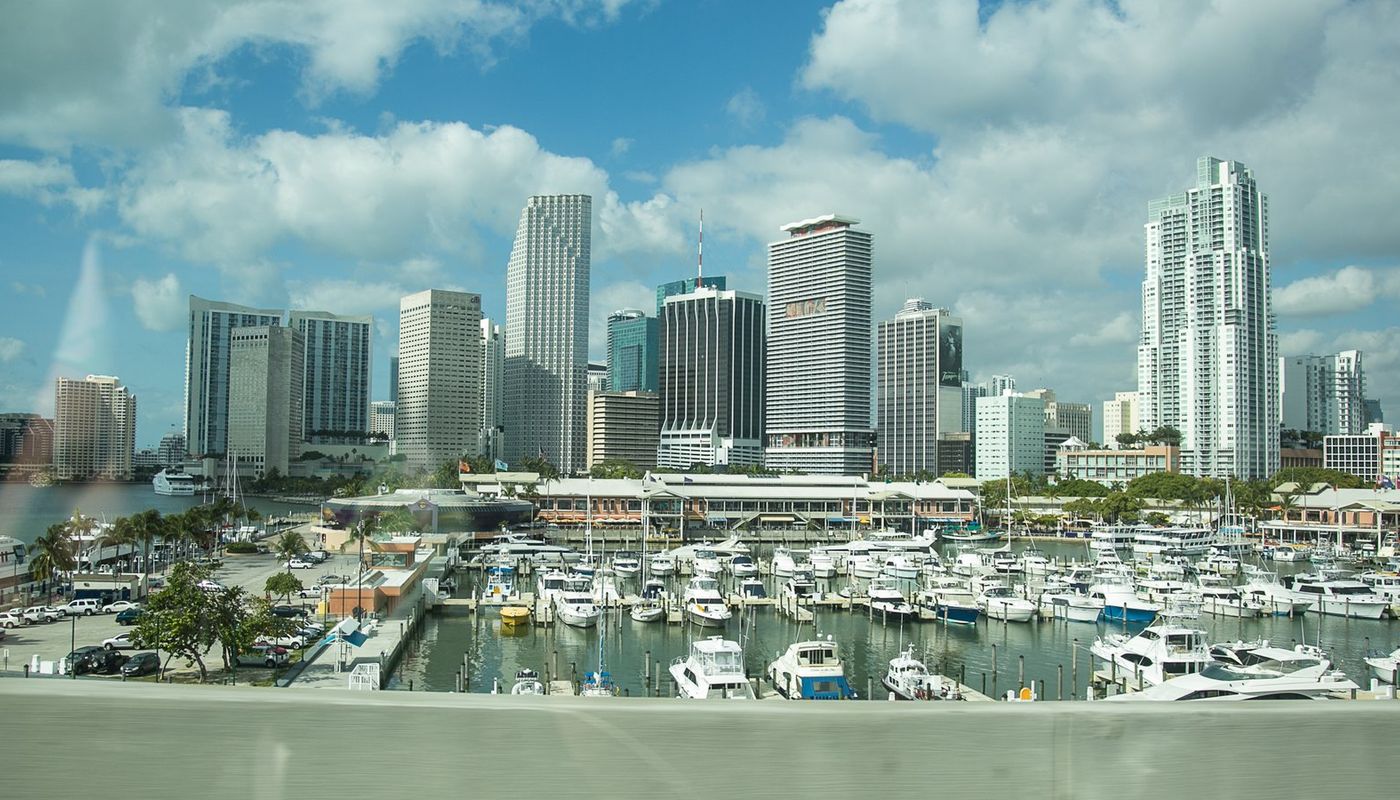
- Zoning Framework
- Miami 21 Form-Based Code (adopted 2009, updated annually)
- Documentary Stamp Tax Rate
- 0.70 USD per 100 USD of consideration plus 0.45 USD Miami-Dade Discretionary SurTax in 2026
- Master Building Permit Review Time
- 60 to 120 business days via the City of Miami Building Department
- Primary Recording Authority
- Miami-Dade County Clerk of the Courts and Comptroller
- Final Occupancy Instrument
- Certificate of Occupancy issued by the City of Miami Building Department
Overview of the Approval Process in Miami
Property development in Miami, Florida, operates under a dual-level regulatory framework involving municipal authorities and county-level agencies. The City of Miami Department of Planning and the City of Miami Building Department govern zoning, architectural review, and structural safety within city limits. Concurrently, Miami-Dade County Department of Regulatory and Economic Resources (RER) exercises oversight regarding environmental resources, water management, sewer extension, and countywide infrastructure impacts.
Developers must navigate a linear progression from initial due diligence and title verification through zoning entitlements, technical plan review, trade permitting, and final inspection. Bypassing required approvals or initiating site work without active permits triggers stop-work orders and financial penalties under Chapter 10 of the City of Miami Code.
Site Acquisition and Land Registration
Land ownership in Miami is transferred via deeds recorded with the Miami-Dade County Clerk of the Courts and Comptroller, which acts as the official registry. Before closing on property, developers conduct title searches to verify clear title and ensure no unrecorded municipal liens exist.
Real estate conveyances incur the Florida State Documentary Stamp Tax at a rate of 0.70 USD per 100 USD of consideration. In Miami-Dade County, commercial real estate transfers and non-single-family residential transactions incur an additional Discretionary SurTax of 0.45 USD per 100 USD, bringing the combined transfer tax rate to 1.15 USD per 100 USD of total purchase value.
Zoning Classifications and Land-Use Changes
Development in the city is governed by Miami 21, a form-based zoning code that classifies property into transects ranging from T3 (Sub-Urban) to T6 (Urban Core). The code regulates building height, floor area ratios (FAR), setbacks, and lot coverage.
By-Right Development versus Discretionary Entitlements
Projects that conform strictly to the underlying transect zone proceed as by-right developments, moving directly to site plan review and building permit applications. Where a project seeks modifications or uses not permitted by right, developers must apply for specific administrative or legislative approvals:
1. Warrant: Administrative approval issued by the Planning Director for minor land-use modifications or designated uses. Processing takes 60 to 90 days. 2. Exception: Discretionary approval granted by the Planning and Zoning Appeals Board (PZAB) for conditional uses requiring public hearings. Processing takes 4 to 6 months. 3. Variance: Relief from specific dimensional or physical constraints of the zoning code, evaluated by the PZAB. Processing takes 4 to 6 months. 4. Re-zoning or Comprehensive Plan Amendment: Major legislative changes requiring reviews by the Planning Advisory Board and final approval by the Miami City Commission, alongside Miami-Dade County review. This process requires 9 to 18 months.
Sequential Permitting Workflow
Once land-use entitlements are secured, developers enter the technical permitting phase. Construction cannot commence until all required master and trade permits are issued by the relevant municipal departments.
Step 1: Environmental and Infrastructure Approvals
Prior to building permit issuance, plans must be submitted to Miami-Dade County RER for Environmental Plan Review (DERM approval). This stage verifies compliance with stormwater drainage, tree preservation, coastal construction lines, and sewer capacity. Approval takes 30 to 60 days.
Step 2: Master Building Permit
The master building permit application is submitted to the City of Miami Building Department via the Electronic Permit Processing System (ePlan). Drawings are reviewed across multiple disciplines, including structural, mechanical, electrical, plumbing, fire rescue, and accessibility. Initial review rounds typically take 60 to 90 business days. Plan revisions and resubmissions add 30 to 60 days to the schedule.
Step 3: Trade Permits and Specialty Clearances
Following master building permit issuance, licensed subcontractors obtain specific trade permits for electrical, plumbing, HVAC, and fire suppression systems. Separate approvals from the Public Works Department are required for right-of-way utilization, sidewalk closures, and utility hookups.
Completion, Final Inspections, and Occupancy
Construction activities are subject to mandatory phase inspections conducted by city building inspectors. Key milestones include foundation, framing, rough trade, and final structural inspections.
Upon successful completion of all work and clearance of all trade permits, the developer applies for the Certificate of Occupancy (CO) from the City of Miami Building Department. The CO serves as the legal document certifying that the structure complies with the Florida Building Code and local zoning laws, authorizing legal occupancy and asset operation. Obtaining a CO takes 2 to 4 weeks following final inspection clearance.
Common questions
- Which authority registers property deeds in Miami?
- Property deeds and real estate title transfers are recorded with the Miami-Dade County Clerk of the Courts and Comptroller Official Records department.
- What is the primary zoning code used in the City of Miami?
- Development in the City of Miami is regulated under Miami 21, a form-based zoning code that organizes land into transect zones ranging from low-density residential to high-density urban cores.
- How long does it take to get a Master Building Permit in Miami?
- Plan review for a Master Building Permit through the City of Miami Building Department generally takes between 60 and 120 business days, depending on plan quality and resubmission cycles.
- What transfer tax rates apply to property purchases in Miami-Dade County?
- Transfers carry the standard Florida State Documentary Stamp Tax of 0.70 USD per 100 USD, plus a 0.45 USD per 100 USD Miami-Dade County Discretionary SurTax for commercial and non-single-family residential properties.
- What document is required before a completed building can be occupied?
- A Certificate of Occupancy issued by the City of Miami Building Department is legally required before any building can be occupied or opened for operation.
- What is the difference between a Warrant and an Exception under Miami 21?
- A Warrant is an administrative approval granted by the Planning Director for designated minor uses, whereas an Exception requires a public hearing before the Planning and Zoning Appeals Board.
- villaterras.com. villaterras.com
- resourcehub.bakermckenzie.com. resourcehub.bakermckenzie.com
- dlapiperrealworld.com. dlapiperrealworld.com
- mmcpl.tech. mmcpl.tech
- leaddeveloper.com. leaddeveloper.com
- en.wikipedia.org. en.wikipedia.org
- legalmondo.com. legalmondo.com
- nochumson.com. nochumson.com
Compiled by the Propstock research desk from the sources above.