PGIM Real Estate Curbs Japan Office Buying as Rate Hikes Squeeze Yield Spreads
Rising debt costs are eroding historical yield-spread arbitrage in Tokyo, forcing institutional asset managers to pivot capital toward alternative real estate sectors.
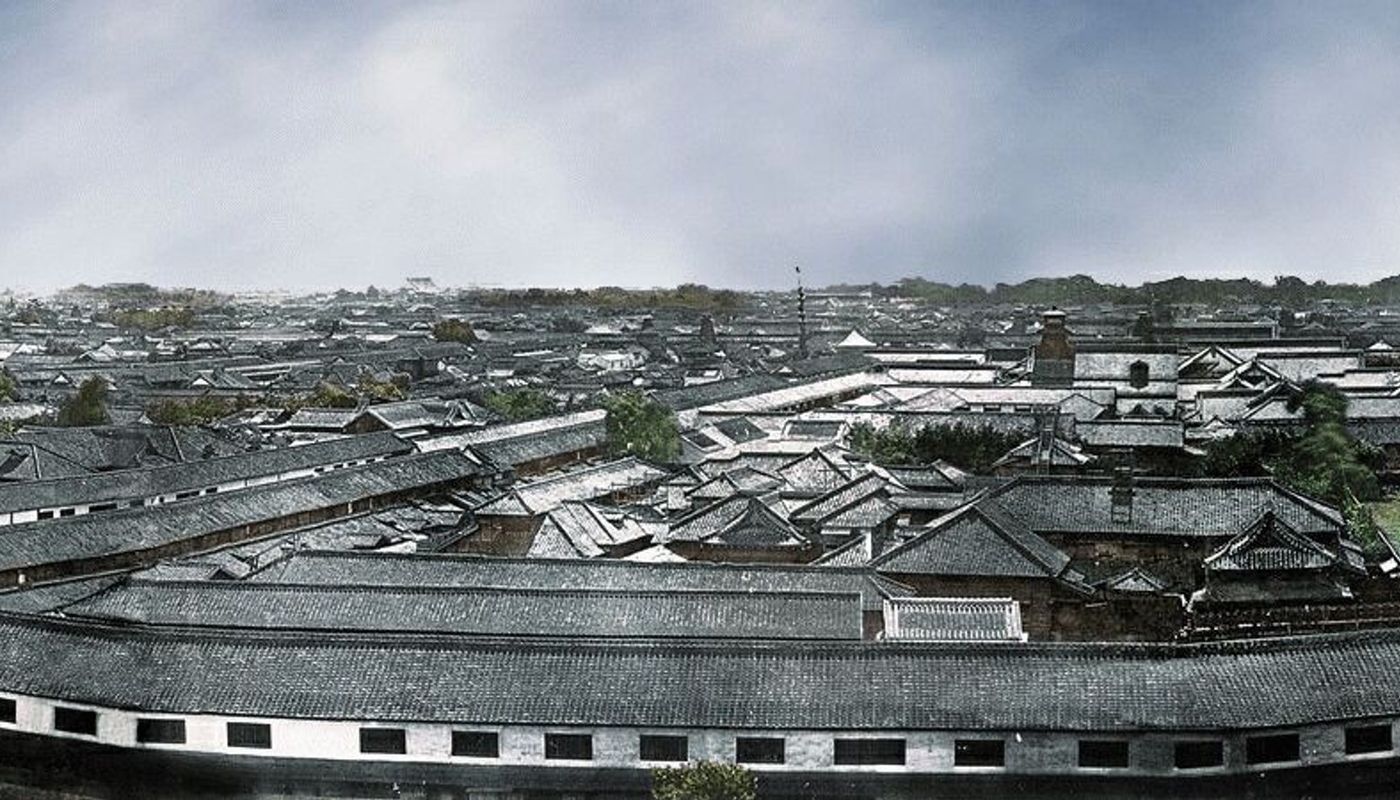
PGIM Real Estate has adopted a more selective acquisition strategy in Japan as rising domestic interest rates inflate debt financing costs and compress yield spreads over government bonds. David Fassbender, Asia-Pacific Real Estate Head at PGIM Real Estate, oversees approximately $3 billion in Japanese real estate assets for the firm. The asset manager plans to deploy at least $1 billion in Japan during 2026, according to company announcements. However, the firm is systematically reducing its exposure to competitive office markets and redirecting institutional capital toward data centers and logistics assets.
This allocation shift reflects a broader recalibration among international buyers navigating the end of cheap Japanese leverage. Specific transaction structures, asset-level consideration figures, debt-to-equity ratios, and price-per-square-metre metrics for recent individual property acquisitions were not disclosed by the fund manager. On our reading, the decision to scale back office purchasing demonstrates how higher borrowing costs are dismantling the leveraged yield-arbitrage model that previously driven cross-border investment into Tokyo real estate.
Scale of International Retrenchment
Cross-border transactional activity reveals a growing divergence between domestic investment volumes and foreign capital deployment. Acquisition deals involving global capital in Japan declined 12% year-on-year in Q1 2026, according to MSCI data. Global investors have slowed purchasing pace as narrowing spreads reduce total returns on equity, particularly within commercial office space where pricing remains tight.
In contrast, overall transactional activity across the country maintains significant momentum due to domestic institutional participation. Japan's total commercial real estate investment volume reached JPY 1,121.0 billion in Q2 2026, according to CBRE. This total represents a 17% year-on-year increase in aggregate deal volume. On our reading, the contrast between a 12% drop in global capital transactions and a 17% expansion in total volume indicates that local capital is replacing foreign syndicates that rely heavily on accretive debt.
The Monetary Policy Mechanism
The operational landscape for debt-financed acquisitions has altered as the Bank of Japan progresses with monetary policy normalization. The central bank initiated its tightening cycle on July 31, 2024, when it raised its benchmark interest rate by 15 basis points to 0.25%, according to JLL. Following a subsequent rate hike in December 2025, the Bank of Japan maintained its policy interest rate at 0.75% in March 2026, according to reporting by KED Global.
This structural monetary tightening has directly altered commercial debt terms across Japanese real estate markets. Floating-rate real estate debt costs in Japan increased by approximately 100 basis points over the 12 months leading into Q3 2026, according to PERE. The increase in borrowing costs has directly eroded cash-on-cash equity returns for leveraged buyers.
At the same time, benchmark government bond yields have risen, eroding the relative risk premium of property assets. Tokyo prime office yield spreads narrowed by 40 basis points year-on-year to 2.1% in Q4 2024, according to DWS. This compression occurred as 10-year Japanese Government Bond yields rose to 1.5%. On our reading, when debt costs rise by 100 basis points while yield spreads narrow to 2.1%, real estate buyers relying on high debt ratios can no longer achieve target hurdles without substantial operational net operating income growth.
Consequences for Cross-Border Capital Allocation
For cross-border allocators, the squeezing of yield spreads necessitates a structural shift in sub-sector selection. Historical investment strategies in Tokyo relied on borrowing floating-rate yen at nominal interest rates to capture a predictable spread over prime office yields. On our reading, the likely effect of rising debt costs is a permanent reduction in pure financial engineering, forcing investment managers to seek operational growth rather than yield arbitrage.
PGIM Real Estate's strategic pivot away from competitive office assets into logistics facilities and data centers illustrates this market evolution. Industrial and digital infrastructure sectors offer alternative growth dynamics, including inflation-linked leases and secular demand drivers, which can absorb higher debt service obligations. On our reading, institutional managers who continue allocating capital to Japan will increasingly restrict office acquisitions to complex value-add repositioning where net operating income can be significantly expanded.
Furthermore, foreign fund managers operating in Japan must reassess equity hurdle rates and capital stack architectures. When base borrowing rates sit higher, the leverage neutral point moves lower, requiring buyers to inject higher equity ratios into acquisitions. On our reading, asset managers unable to secure higher operational yields will see reduced fund commitments from global investors who can find competing risk-adjusted returns in alternative geographic markets.
The Tokyo Office Counterweight
For this analytical reading to be wrong, underlying occupier fundamentals in the Tokyo commercial office market would need to generate operational rental growth capable of fully offsetting yield compression and debt cost expansion. There is concrete evidence that occupier demand remains robust despite broader capital market adjustments.
Tokyo office sector rental growth reached 15% to over 20% year-on-year by Q3 2026, according to PERE. This accelerated occupational performance provided a substantial income buffer for property owners, directly counteracting the impact of rising interest rates on capital values. Strong tenant demand has enabled prime assets to maintain firm capital pricing despite elevated borrowing benchmarks.
In addition, investor bidding for prime commercial space has kept asset yields near historic lows. Expected net operating income yields for prime Tokyo office assets compressed by 5 basis points quarter-on-quarter in Q2 2026 to reach new record lows, according to CBRE. This continued yield compression confirms that competition for landmark assets remains intense among well-capitalized buyers, challenging the premise that rising borrowing costs will automatically force across-the-board repricing in prime commercial real estate.
What to Watch
The trajectory of Japanese real estate capital markets will depend on forthcoming central bank policy actions and monetary announcements. The key event for institutional allocators is the Bank of Japan's September 2026 monetary policy decision. Financial markets widely anticipate a potential rate hike to 1.25% at that meeting, according to reporting by The Edge Singapore.
If the Bank of Japan executes a rate hike to 1.25% in September 2026, floating-rate debt costs will increase further, expanding the gap between borrowing costs and prime office yields. Investors must track whether Q3 2026 global acquisition volumes in Japan extend the 12% decline recorded in Q1 2026, or if strong rental growth performance will continue to insulate prime office valuations. These upcoming metrics will determine whether foreign institutional capital continues to exit the office sector in favour of logistics and data centers.
- The Japan Times. PGIM turns more selective on Japan real estate as rates climb
- PERE. Japan is still the go-to APAC market for foreign capital
- CBRE. Japan Investment MarketView Q2 2026
- KED Global. Japanese real estate resilient despite BOJ's tightening bias: Savills IM
- JLL. Implications of Bank of Japan's recent interest rate hike
- DWS. Japan Real Estate Market Outlook Report 1 / Macro Economy and Investment Market
- UA.News. PGIM becomes more cautious about investing in Japanese real estate amid rising rates
- The Edge Singapore. PGIM turns more selective on Japan real estate as rates climb
Compiled by the Propstock research desk from the sources above.